
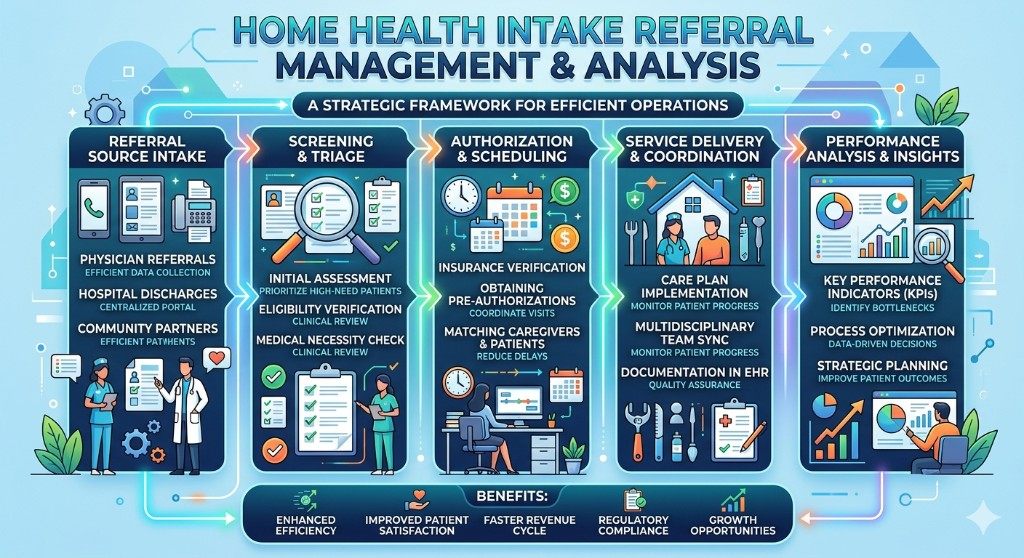
Referral management is more than answering the fax or portal. For agency owners, it is the operating system that turns volume into admits: time, documentation quality, and accountability from first referral to SOC-ready. When that system is weak, you see the same symptoms—long time-to-SOC, low conversion, denials after care starts, and referral sources who stop sending patients your way.
What referral management means in home health
Think in three layers: pipeline (referral received through SOC scheduled and completed), readiness (packet defensible for Medicare and your other payers before you commit a SOC date), and relationships (hospitals and physicians trust you when you respond with specifics and you do not start care on broken packets). Your intake team executes the steps; you set the rules and the review cadence so nothing depends on heroics.
Minimum pipeline stages (same language everywhere)
Whether you use a spreadsheet or your EHR, use consistent stage names so weekly numbers mean something. A practical sequence: received → triage/eligibility started → documentation complete (F2F and orders verified per your order-to-note rules) → authorization in hand or in progress when required → SOC scheduled → SOC completed (admit). Align this with your intake checklist so “complete” matches what billing and compliance expect.
Readiness before speed
Scheduling SOC to please a discharge planner when the packet is not defensible creates rework, denials, and ADRs. Owner expectation should be clear: no SOC date until eligibility and regulatory checks pass your standard, with face-to-face timing and content verified and orders aligned. That single discipline often does more for conversion over time than shaving one more hour off the clock on bad packets.
Ownership without “someone should…”
Every waiting referral needs a name on it: who chases the physician, who owns auth, who schedules SOC. Your SLA and owner worksheet is the tactical layer; the owner operating system is you enforcing that handoffs have a done criterion and a log. When something stalls, the weekly review answers who to ask first.
The weekly 15-minute owner review
Ask for a short brief, not a story: referrals in, SOCs out, conversion rate, median (or average) days referral-to-SOC, and the top bottleneck this week. Compare to funnel metrics you already track. If conversion drops or days stretch, tie it to a stage and one fix (training, staffing, or rule), not ten. When you improve, tell referral sources what changed—it protects relationships and volume.
Revenue, denials, and survey risk
Intake discipline is owner-level risk management. Gaps that start at referral show up later as denials and appeals and as stress on clinical and billing. A pre-SOC mindset is cheaper than post-bill firefighting. We have a Referral Management Weekly Review (1-pager) you can download: pipeline stages, owner KPIs, bottleneck, and one owner action. Use the button below to get it.